Chapter I: What is an Atmospheric River (AR)?
What is an Atmospheric River (AR)?
Atmospheric rivers are meandering filaments of intense water vapor transport, located mainly over the oceans, thousands of kilometres long and hundreds of kilometres wide. They originate in the sub-tropics and move north-eastward in the northern hemisphere. Because of similarities with a river, they are called "rivers in the sky". They carry out most of the poleward water vapor transport in the mid-latitudes. Moreover, they can cause extreme wind gusts, intense precipitation, and flooding when making landfall (Figure 1).
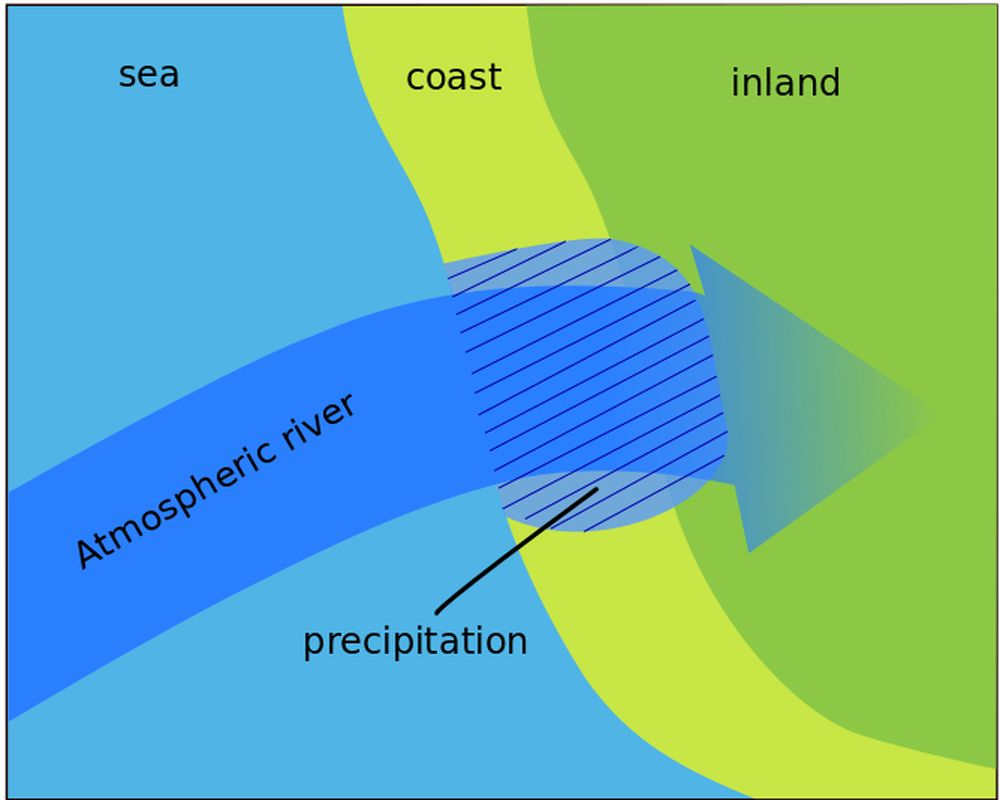
Figure 1: Schematic of an atmospheric river making landfall and being lifted by coastal orography.
Atmospheric rivers were first described in 1994 by Zhu and Newell [1] and became more widely known under the name of "pineapple express", referring to ARs mainly affecting the Californian coast. Later publications pointed out that ARs are a global phenomenon with on average five of them existing at any given time around the world.
The moisture in ARs is concentrated in the lowest three kilometres and is associated with higher wind speeds that can be referred to as a low-level jet. While the initial moisture supply comes from moist tropical air masses, evaporation from the oceans constantly feeds ARs. When moving further north, they are typically located in the warm sector of extra-tropical cyclones, often seen merging with a cold front. However, ARs differ in many ways from the concept of relative streams that are often used to describe conveyor belts associated with mid-latitude low-pressure systems such as the warm conveyor belt.