Limb Cooling
Limb cooling occurs when the radiation travels through a longer path in the atmosphere at slanted viewing angles in comparison to the nadir path, resulting in increased absorption for a given wavelength. Absorption occurs especially by ozone and carbon dioxide, in so called absorption channels. In contrast, atmospheric window channels are regions in the electromagnetic spectrum where the Earth's atmosphere absorbs very little radiation, thereby allowing most of the radiation to pass through.
Because of limb cooling, the colors in RGBs change towards the edges of imaging areas. This color distortion can complicate the interpretation of satellite images: for example, in the Airmass RGB it can make it harder for a forecaster to locate jet streams or areas of cyclogenesis. In Figure 15, it can be seen that the color contrast between purple and red tones becomes weaker farther north. This is because at lower viewing angles there is more absorption at the wavelengths set to the red color beam than at less slanted viewing angles farther south.
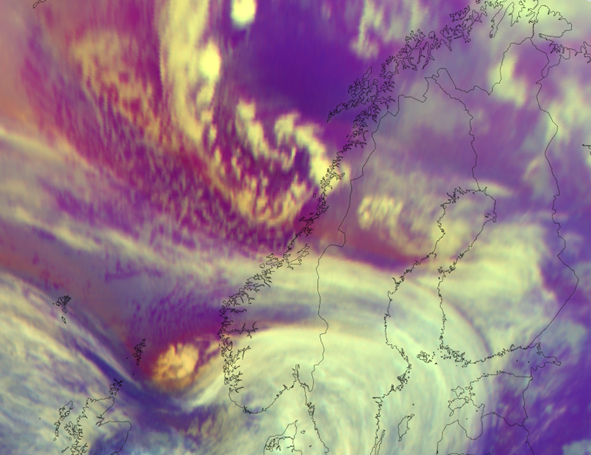
FIgure 15: SEVIRI Air Mass RGB: 04 April 2022, 07:15 UTC
If IR measurements farther away from the nadir are compared between window and absorption channels, a given cloud top or surface always appears colder in the absorption channels. This is most noticeable in the hues of water vapor RGB images and near the edges of full disk Airmass RGB images, as shown in Figures 16 and 17. It is also worth noting that limb cooling is not just a high-latitude problem: for example, it can be observed in the image in northwestern parts of Brazil. In water vapor imagery the edges of the disc appear drier than they really are due to low satellite viewing angles and therefore longer optical paths.
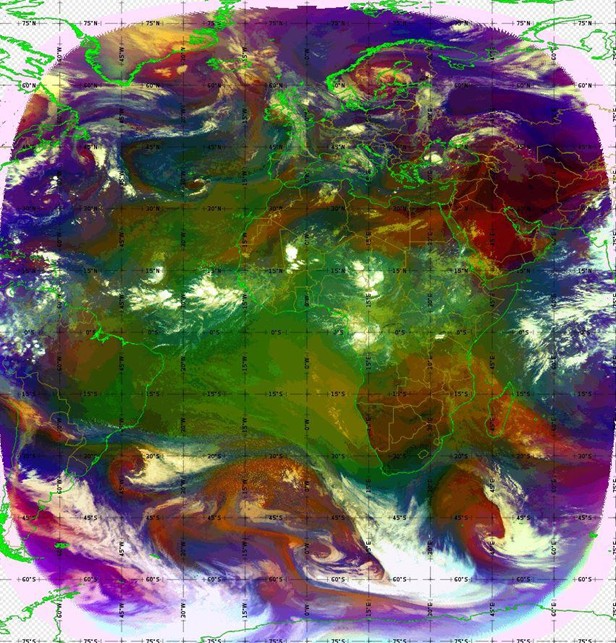
FIgure 16: SEVIRI Airmass RGB Full disc: 02 September 2024, 09:00 UTC
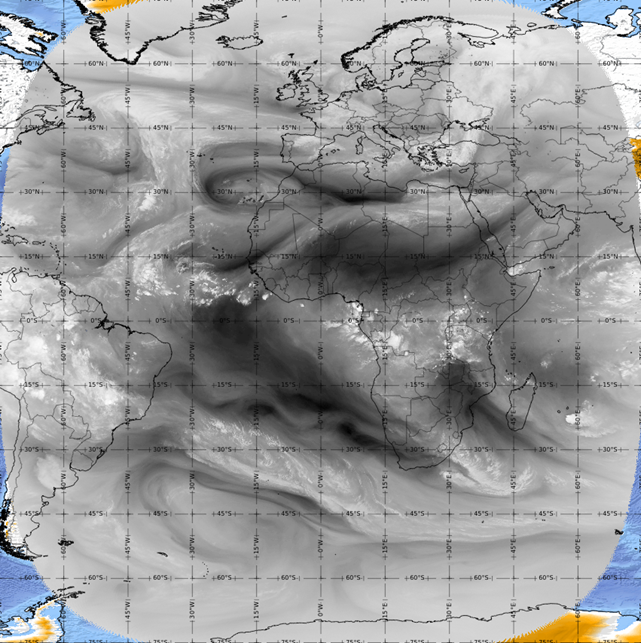
Figure 17: SEVIRI WV 6.2 microns Full Disc: 21 November 2024, 09:00 UTC
In the Airmass RGB the green beam is set to be the difference between the IR 9.7 and IR 10.8 channels (Figure 18). The slanted viewing angle at the edges of the full disk image reduces the radiation measured at 9.7 μm, while the window channel at 10.8 μm remains largely unaffected, and a larger (negative) brightness temperature difference results in a smaller green contribution. Limb cooling can also be seen in the edges of the imaging swath of a polar orbiting satellite in Figure 19 (here over western Russia for example), but for polar satellites the phenomenon is not as strong as for GEO satellites, because the distance to the edge of an image swath is smaller than the distance to the edges of an image disk.
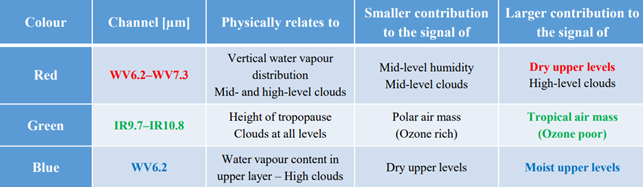
Figure 18: Air Mass RGB recipe for SEVIRI
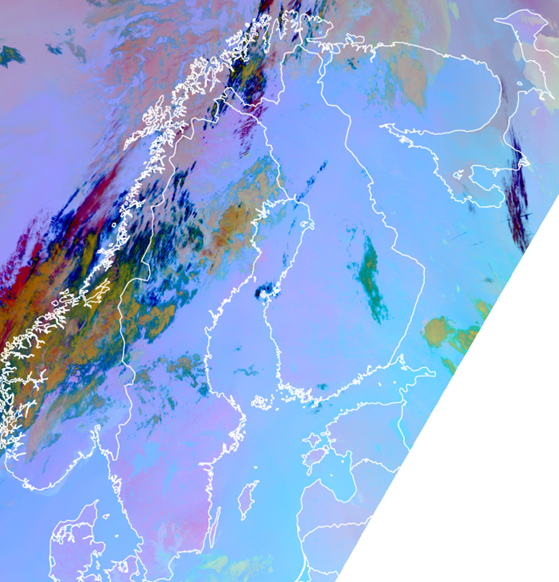
Figure 19: VIIRS Day Microphysics RGB: 26 June 2024, 02:24 UTC
Exercise 4
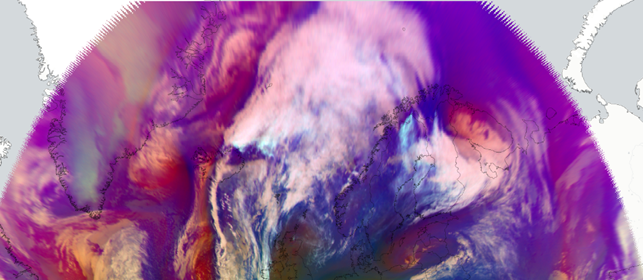
SEVIRI, Full Disc (cropped to high latitudes), 7 November 2024, 11:00 UTC
Why does the color in the Airmass RGB turn blue/purple at high latitudes at slanted satellite viewing angles?