Personal Data

In the next web page you will be requested to provide your identifying information (email address – the only mandatory one, name, surname and company name). The purpose of collecting this is to:


Your personal data will be processed and retained only for the purpose for which it was collected. Personal data will not be published, sold or made available for general access or to third parties. You may request to have your data corrected and updated, or if possible, deleted.


Should you have questions regarding the use of your personal data, please contact info@eumetrain.org or tso@eumetrain.org.


Personal Data

In the next web page you will be requested to provide your identifying information (email address – the only mandatory one, name, surname and company name). The purpose of collecting this is to:


Your personal data will be processed and retained only for the purpose for which it was collected. Personal data will not be published, sold or made available for general access or to third parties. You may request to have your data corrected and updated, or if possible, deleted.


Should you have questions regarding the use of your personal data, please contact info@eumetrain.org or tso@eumetrain.org.


The Training Bulletin

Joint newsletter related to new activities and resources
in European meteorological training

// issue XXXV - December 2025

Activities & events
//image missing//

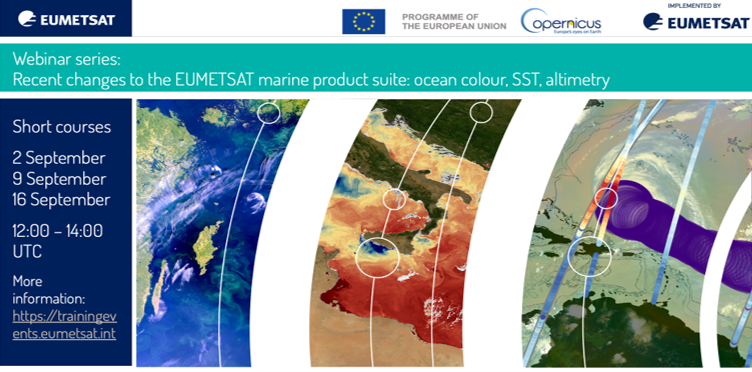
Join the 2026 Supporting Marine Earth Observation Applications course

23 February - 20 March 2026 / Online

In February 2026, we will conduct the next iteration of the EUMETSAT Supporting Marine Earth Observation Applications course. This month-long event, hosted entirely online, will consist of a three-week, self-paced learning phase and a synchronous one-week mini-project development phase. Throughout, we will work with you to co-develop workflows that use our marine data to support your application and research needs, as defined by you.


The course will focus on products from the Copernicus Sentinel-3 and Sentinel-6 satellites, those from Copernicus contributory missions and downstream services, and those provided by our Ocean and Sea Ice Application facility (OSI SAF). Projects that centre on the use of ocean colour, sea surface temperature, sea surface topography, sea ice, and winds are all in scope. We will provide software tutorials for working with all data streams and introduce adaptable Jupyter Notebook-based code examples to support your workflows.


If you are looking to expand your understanding of our marine Earth observation, want to know more about our marine product portfolio, or are looking to exploit our data to advance your applications and/or research goals, then we encourage you to apply.


For more information on how to apply for this course, please visit the event page.

//image missing//

Applications open for ESSL-EUMETSAT Testbed on Severe Convective Storms

4-8 May,
18-22 May,
14-18 September
& 5-9 Oct 2026 / Wiener Neustadt, Austria

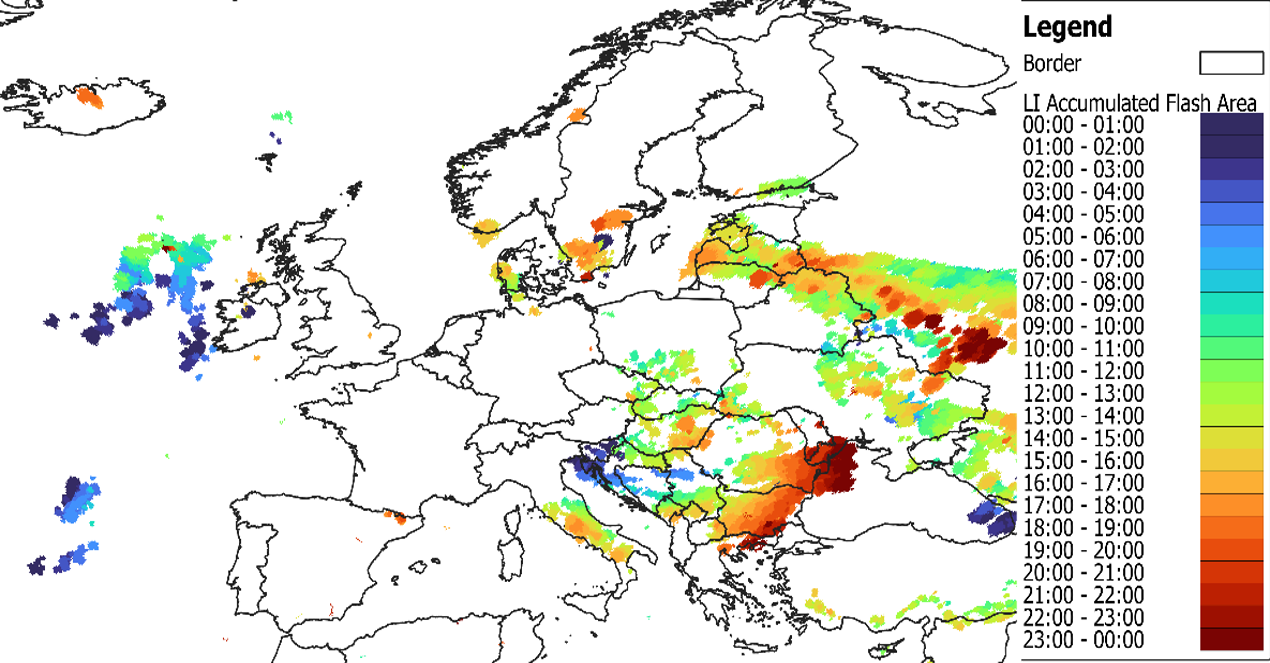
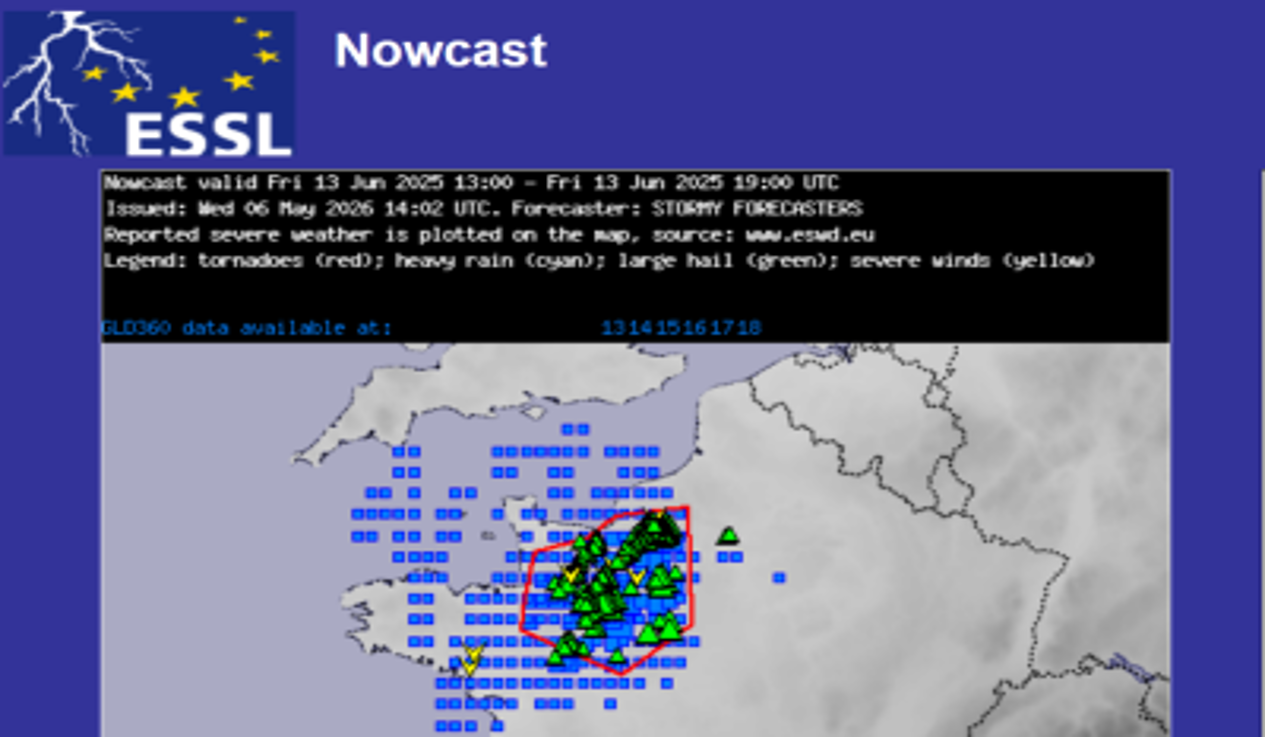
EUMETSAT, in partnership with the European Severe Storms Laboratory (ESSL), offers a series of testbeds to prepare operational forecasters to use data from the Meteosat Third Generation (MTG) and the EUMETSAT Polar System Second Generation (EPS-SG) programmes. Focus will be given to the use of novel MTG satellite data from the FCI spectral imager, and from the Lightning Imager instrument.


In addition, a range of state-of-the-art nowcasting tools and numerical weather prediction-based guidance will be evaluated.


At these events, forecasters learn by simulating an operational forecasting situation, making severe weather forecasts and nowcasts, using a mix of new nowcasting and forecasting tools, and evaluating the quality of the forecast and the value of different products.

Applications to this course are based on the nominations by the heads of delegations of EUMETSAT members.


Nominated candidates can apply at: https://classroom.eumetsat.int/course/view.php?id=158.

//image missing//

Regional Forecaster courses continue in 2026: Baltic+, SEEMET, NOMEK

April - May 2026

A series of regional training courses will be organised with EUMETSAT and regional partners in 2026:


  • Baltic+ blended training course for forecasters from Estonia, Latvia, Lithuania, Poland and Ukraine will consist of an online phase, 9-27 March, followed by the classroom course in Vilnius, 14-16 April, hosted by the Lithuanian Hydrometeorological Service. The focus will be on monitoring warm season frontal precipitation.

  • SEEMET, a training course for forecasters from SE European countries, will take place in Trogir, Croatia, from 13-17 April 2026, hosted by Croatian Meteorological and Hydrological Service. The main topic of the course will be flash and urban floods, with one day focused on MTG products and one day on forest fires.

  • NOMEK, a course for Nordic operational meteorologists, will be hosted by the Icelandic Meteorological Office in Reykjavik, 4-8 May 2026. The course is designed to enhance skills in using satellites, radar, and NWP guidance for forecasting.

  • Participation is by nomination through national meteorological institutions. Contact your institution for more information.

//image missing//

Upcoming webinars - save the dates!

22 January,
24 February 2025 / Online

Save the date for the two upcoming webinars.


AI as Research Copilot: Literature, Analysis, and Communication by Tsvet Ross-Lazarov (COMET) on 22 January 2026 at 14:00 UTC. This hands-on workshop introduces practical uses of AI in scientific workflows, including accelerating literature reviews, refining research proposals, analyzing and visualizing data, and adapting technical content for different audiences. Participants will also learn effective prompting, understand AI's limitations (such as hallucinations), and gain practical experience using these tools responsibly. Register.


EUMETSAT WGCEF webinar by Nataša Strelec Mahović (EUMETSAT) on 24 February 2026 at 12:00 UTC. Nataša will focus on FCI and LI use in nowcasting. Register.


More details will be made available in future.


// issue XXXV - December 2025

Resources & Tools
//image missing//

New short exercises to practice MTG applications now available for you

Online

The library of short, self-paced exercises for reinforcing key Meteosat Third Generation (MTG) application concepts has expanded with five newly-released exercises. Developed by experts from EUMETSAT and EUMeTrain, these exercises are freely available under a Creative Commons license, so you're welcome to share, adapt, and build upon them with proper credit.


Each activity takes around 15-20 minutes and is perfect for quick, focused learning.


Access the exercises. No account or log in is required.


We'd love to hear from you. Share your feedback or suggestions at training@eumetsat.int.


//image missing//

New e-learning module: Fog Focus

Online

Fog remains one of the most challenging phenomena to forecast — high-impact, locally variable, and often occurring in environments where small-scale processes matter. This focused training module equips forecasters with the tools to better understand, predict, communicate, and evaluate fog events.


What will you learn?

In this hands-on module, participants will:


  • Apply core knowledge of fog physics and typical formation, maintenance, and dissipation mechanisms.
  • Integrate model output with observational data to assess fog probability and uncertainty, tailored to local conditions.
  • Translate meteorological insights into clear, actionable, user-focused guidance, updating forecasts as new information becomes available.
  • Conduct rapid post-event analyses to identify misunderstood processes and improve future forecasting strategies.

Who is it for?

This module is designed for new and experienced forecasters seeking to deepen their understanding of fog processes and sharpen their forecasting skills.


Access the e-learning: Fog Focus

//image missing//

EUMeTrain Monthly Weather Briefings

Online

Once a month EUMeTrain organises a weather briefing, which is open to everyone to discuss the present weather situation. The basis of the discussions is that current day's satellite images and the corresponding numerical weather prediction data. A basic knowledge of conceptual models used in satellite meteorology is an advantage, in order to follow the presentations.


The weather briefings are offered by meteorologists from Croatia, Portugal, Finland, Hungary, and Austria. At the end of the briefings, participants can discuss with the presenters. You can find them on the EUMeTrain website, EUMETSAT Training Calendar and on the EUMeTrain channel on YouTube.


//image missing//

New e-Learning module: Boosting Learner Engagement in Synchronous Online Training

Online

Looking to boost engagement in your online sessions?


Whether you want to energise synchronous training, spark interaction in virtual meetings, or discover practical tools for designing dynamic online workshops, a new self-paced module created by Laura Beaudouin (MeteoSwiss) is now available. It offers concrete techniques you can apply immediately to improve the quality and impact of your digital facilitation.


This new e-learning introduces practical, easy-to-use strategies to boost interaction, overcome common online training challenges, and make participation feel natural rather than forced. You'll experiment with simple digital tools, learner-centred activities, and even some AI, to design more engaging learning experiences. This module is designed for anyone looking to improve the effectiveness of their virtual trainings, meetings, or workshops.


Access the module here Boosting Learner Engagement in Synchronous Online Training.


Please note you will need a free account on Eumetcal to start the module.

// issue XXXV - December 2025

Stories & Achievements
//image missing//

The Joint CALMet XVI - CONECT 3 Conference

24-28 November 2025 / Florence, Italy (Hybrid)

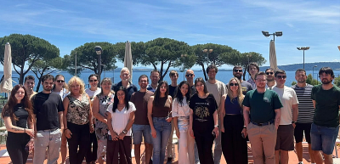
The Joint CALMet XVI - CONECT-3 conference was organised as a hybrid event by the WMO RTC of CNR-IBE Italy with the CALMet Working Group and the CONECT Management Group, attracting more than 200 participants from 65 countries, including 49 onsite in Florence. Under the theme 'Future-Proofing Meteorological Training: Bridging Collaboration, Experience, and Innovation', the hybrid event reflected on achievements, introduced new methodologies, and mapped future strategies, strengthening partnerships, practical learning and innovative exchange to enhance the global workforce.


CALMet XVI accommodated diverse time zones: Eastern, Florence and Western. The program had 24 keynote speeches, eight workshops, three regional discussions, and an online poster exhibition featuring 43 contributions.


The follow-up CONECT-3 meeting evaluated ongoing initiatives, shared institutional experiences, and prioritised coordination and sustainability in the WMO Global Campus. Topics included progress reports, CALMet regional insights, AI applications in training, youth engagement, gender inclusion, volunteer involvement, and succession planning.


The event reaffirmed the community's commitment, strengthened collaboration, practical tools, innovation, and inclusivity advancing global training capacity. .


//image missing//

EUMeTrain MTG Event Week

8 - 12 December / Online

EUMeTrain organised another successful Event Week about the Meteosat Third Generation satellites, from 8-12 December. The event topics were divided into four groups:


  • MTG-S
  • MTG-I
  • MTG data assimilation
  • Ocean colour & sea surface temperature

This event week was mainly focused was on the recently launched MTG-S and the IRS & UVN instruments.


The event was a success, with more than 100 participants.


Users will soon be able to access the recording and lecture slides on the EUMeTrain website.

//image missing//

2025 Climate Symposium

28 - 30 October / Darmstadt, Germany

The 2025 EUMETSAT Climate Symposium 'From Space to Climate Services: Co-Creation in Action' was held on 28-30 October in Darmstadt, celebrating 25 years of Climate@EUMETSAT, and gathering 170 participants from 20 Member States. Through keynotes, panels, and breakout sessions, the community examined how to better collaborate to fully exploit the potential of satellite observations for actionable climate information, to the benefit of policy and decision-making.


Main findings include:


  • Satellite climate data are becoming increasingly important for providing information to policy and decision-makers for assessing ongoing environmental changes (e.g. in IPCC assessment reports).
  • Climate services require high-quality, long-term, consistent climate data records, extending into NRT-like observation, as well as future climate information. Climate services would also benefit from closer co-creation of workflows with data providers.
  • Stronger coordination between research and operations is essential to move scientific advances into service delivery.
  • Improved data discoverability, interoperability, and cloud-readiness are key for future climate data use.

A peer-reviewed summary of the symposium will be published in the Journal of the European Meteorological Society.

//image missing//

FMI-EUMETSAT Aviation Forecasters Testbed 2025 - at EUMETSAT

27 - 31 October 2025 / Darmstadt, Germany

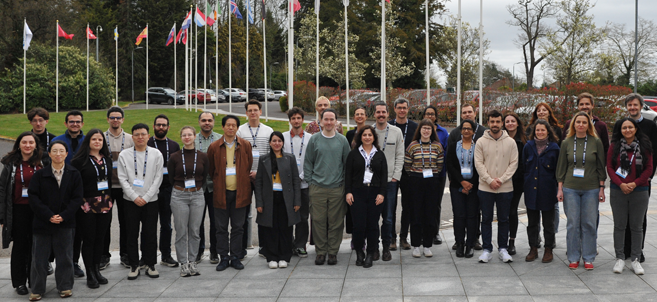
The second forecaster testbed for 2025 was held at EUMETSAT headquarters in Darmstadt.


Twenty aviation forecasters, from 18 European countries, attended. The topics covered icing, low clouds and fog, turbulence, LI data and volcanic ash.


The training included theory, case studies, testing new aviation products, and live weather discussions. All the case studies included a short theory section about the topic and new products related to the case.


The participants were divided into groups of three throughout the training week, and the groups were changed every day. The case studies were constructed so the participants were comparing SEVIRI imagery to FCI and polar (VIIRS) products.


The focus was on using the new RGB composites and the new test products. Additional time was provided for the participants to find interesting cases for each analysed topic and post examples on Padlet.


A WhatsApp group was created for the participants, which helped build a sense of community and made it easier to communicate. The group is still active, with members continuing to share experiences from their operational shifts.


Having a testbed at EUMETSAT premises allowed EUMETSAT researchers and developers to get in touch with forecasters.

//image missing//

7th Joint Training in Atmospheric Composition

13-17 October 2025 / Brussels, Belgium (Hybrid)

From the first online sessions to the final hands-on exercises in Brussels, the Seventh Joint Training on Atmospheric Composition, organised by EUMETSAT, ECMWF-CAMS and ESA, and hosted by BIRA-IASB, demonstrated the value of combining theory, practice and networking activities in a single learning journey. Bringing together early-career researchers and professionals from different regions, the training created a great environment to focus on real-world applications of atmospheric composition data. Attention was given to aerosols, dust, and wildfire monitoring.


Throughout the course, participants moved beyond basic theory, engaging directly with satellite products, modelling outputs, and validation datasets through guided practical sessions. The use of the WEkEO platform played a key role in this experience, allowing participants to explore data during the training and continue working independently afterwards. Scientific discussions emerged naturally during group work, especially around retrieval methodologies and the interpretation of aerosol products.


Feedback confirmed that the training met its objectives, with participants (25 on-site and 223 online unique participants) reporting increased confidence in using satellite data and applying newly acquired skills in their own research and professional activities. The course succeeded in fostering collaboration, knowledge exchange, and long-term capacity building, leaving participants excited and ready to apply atmospheric composition data in operational and research contexts.


Resources, including webinars recordings, are available at: https://atmostraining.info/


//image missing//

Turning Expertise into Training - Fast and Together

November 2025 / De Bilt (KNMI) / Offenbach (DWD)

This past autumn, EUMETCAL ran two intensive week-long hackathons — radar meteorology in Utrecht and satellite meteorology in Offenbach — bringing together meteorological experts and instructional designers to create advanced training materials.


The format proved highly productive. Participants selected authentic weather cases, refined learning objectives, and rapidly built draft activities. Instructional designers converted rough concepts into working prototypes while experts added operational insight and scientific accuracy. This constant exchange maintained both pace and quality.


Each team delivered complete prototype lessons by the end of the week — work that would typically take months. The results demonstrate the value of focused time, shared space, and cross-disciplinary collaboration.


The process continues: instructional designers are now refining the prototypes into polished modules, with experts reviewing each iteration before publication on the EUMETCAL website.


//image missing//

A Short Course to Visualise Wildfires with EUMETSAT Sentinel-3 data products

25 November 2025 / Online

A new short course demonstrating how to easily visualise wildfire data using Sentinel-3 products was created by the Atmospheric Composition team at EUMETSAT, to show how to download and process data from the Sentinel-3 satellite.


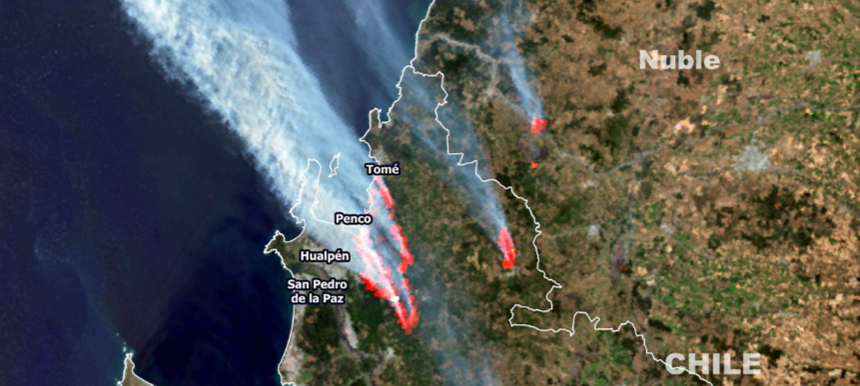
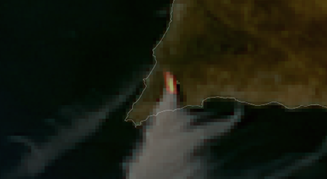
The training focused on the numerous fires that raged across northwestern Spain and northern Portugal, between 15 and 18 August 2025, which filled the skies with thick smoke and turned large parts of the Iberian Peninsula into hotspots of atmospheric pollution. The Sentinel-3 SLSTR instrument captured these events in real time, detecting the precise locations of active fires through its Fire Radiative Power (FRP) product. At the same time, Aerosol Optical Depth (AOD) observations revealed intense smoke plumes, with values exceeding 1.0 at 550nm, far above what is normally seen in this region.


Creating visualisations of these events may seem difficult, but this 1.5-hour course has made it simple. More than 200 people registered, showing the high interest in the topic. Participants learned how to use EUMETSAT's Data Store, and related tools, to access, explore, and visualise FRP and AOD data over the Iberian Peninsula on 16 Augus' 2025, transforming complex satellite observations into clear images.


Users can access the recordings and slides at EUMETSAT Classroom.


// issue XXXV - December 2025

Jobs & Opportunities
//image missing//

Passive Microwave and Radio Occultation Competence Area Manager

by 19 January 2026 / Darmstadt, Germany

In the EUMETSAT matrix organisation, the Remote Sensing and Products (RSP) division of the Technical and Scientific Support (TSS) department provides science support to the development and operations of end-to-end satellite systems, focusing on the development, implementation and validation of new and improved operational observational products and processing chains, and supports the definition of user requirements for future satellite systems.


Within the RSP division, the Passive Microwave and Radio Occultation Competence Area Manager provides scientific leadership and coordinate the science support to the development, commissioning and operations of the Microwave and Radio Occultation missions at EUMETSAT.


Click here for full details.


//image missing//

Copernicus Atmospheric Missions Manager

by 19 January 2026 / Darmstadt, Germany

EUMETSAT is seeking an experienced professional to join the Copernicus Programme Office (CPO) in the Operations and Support to Users (OPS) Department. The position will play a significant role in managing key Earth observation missions under the Copernicus Programme, with a focus on the Copernicus atmospheric missions, such as Sentinel-4, Sentinel-5, CO2M, and, relevant Third-party atmospheric missions, i.e. Microcarb.


The role will support the Copernicus Programme Manager (CPM) in overseeing mission-related activities and ensuring alignment with the obligations of the Copernicus Agreement between EUMETSAT and the European Commission (EC).


Click here for full details.


  • Eumetsat
  • Eumetcal
  • Eumetrain
  • ECMWF


  • Benchmark Email